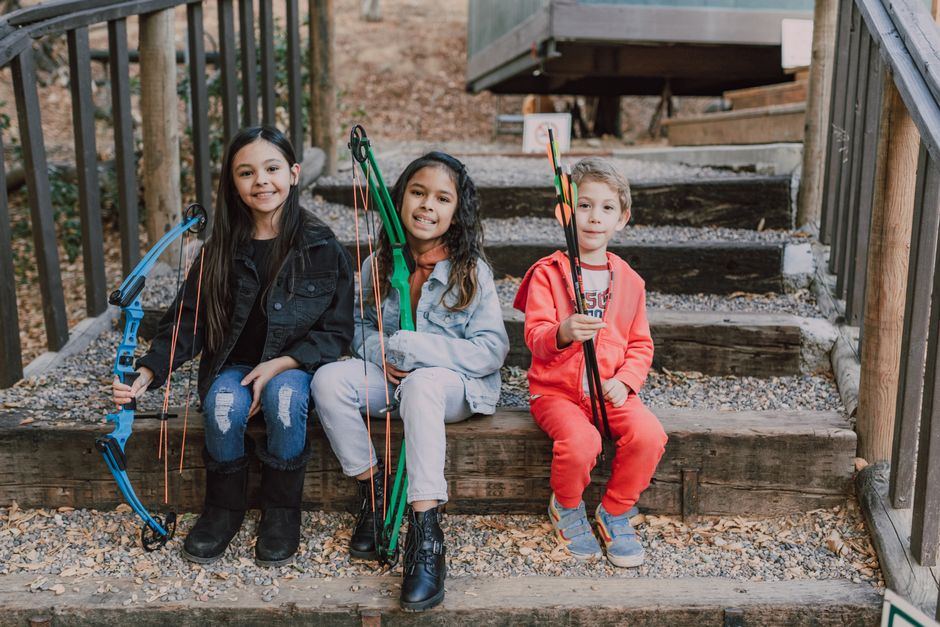
archery bow for a growing/teen archer buying guide

A bow that adjusts as strength and height increase, so you're not buying a new one every year

Buy the bow that grows with the archer, not the one they'll outgrow next season

A fixed draw weight and draw length works fine for a full-grown adult, but a still-growing teenager can outgrow that same spec within a year or two. Here's which of our picks adjust instead of getting replaced.

See the adjustable picks
⚡ Limited-time perk

Free two-day delivery on your pick

Get your pick delivered fast -- try Amazon Prime free for 30 days.

Sponsored link -- we may earn a fee if you sign up. No extra cost to you.

Quick answer: Our top pick for archery bow for a growing/teen archer is the Diamond Archery Infinite Edge Pro (Best for a Growing Archer). If you're looking for best lightweight alternative, the Bear Archery Cruzer G2 is a strong alternative.

Two kinds of "growing into it": draw weight, and draw length

Reviewed by the FletchHaven team · last updated 2026-08-25

A still-growing archer outgrows two things separately: the strength to pull a heavier draw weight, and the arm/height to comfortably reach a longer draw length. A bow that only adjusts one of those still runs out of room eventually.

The Diamond Infinite Edge Pro and Bear Cruzer G2 both adjust on both axes -- 5-70 lb draw weight and a 12-13 to 30-31 inch draw length -- which is why both are commonly recommended as a single bow bought around age 10 that can still be shooting the same archer as a full-grown adult, just re-tuned at a shop as they grow.

The Southwest Archery Spyder and Samick Sage recurves (see our full lineup) only adjust draw weight, via swappable limbs -- their draw length is fixed to the riser length. That makes a recurve like the Spyder a good, inexpensive way to let draw weight grow with a teen's strength, but it isn't the right pick for a child who's still gaining height, since the draw length itself can't grow with them the way the compounds can.

Check both draw weight AND draw length ranges

A wide draw weight range alone isn't enough if the draw length is fixed -- confirm a bow adjusts both if you expect the archer to keep growing taller, not just stronger.

Compounds re-tune at a shop, recurves swap limbs at home

Adjusting a compound's draw weight/length typically needs a bow press, so plan on periodic shop visits. A recurve's limb swap is a simple at-home change, but only solves the draw weight side of growing.

A dedicated youth bow may fit a young child better than any of these

These four bows are adult-lineup picks with wide adjustment ranges, not purpose-built youth bows. For a young child (roughly under 10) just starting out, a dedicated youth model with a lower starting draw weight and shorter minimum draw length is worth comparing before buying into this lineup.

Product Best For Price Rating
Diamond Archery Infinite Edge Pro Best for a Growing Archer $340 - $380 4.7/5
Bear Archery Cruzer G2 Best Lightweight Alternative $300 - $340 4.6/5
Southwest Archery Spyder Recurve Bow Best Recurve for a Full-Grown Teen $100 - $130 4.5/5
Best for a Growing Archer

Diamond Archery Infinite Edge Pro

4.7

A 5-70 lb draw weight and 13-31 inch draw length range in one bow -- reviewers and archery shops commonly point to this exact adjustability as what lets a single Infinite Edge Pro fit an archer from around age 10 through full adult size without a replacement purchase.

  • 5-70 lb draw weight and 13-31 in draw length both adjust without buying new limbs
  • Widely reviewed as a bow that can be bought once around age 10 and grown into through adulthood
  • Ships as a ready-to-hunt package, so accessories don't need separate upgrades either
  • Adjustments typically need a bow press or a shop visit, not a tool-free home adjustment
Best Lightweight Alternative

Bear Archery Cruzer G2

4.6

The same 5-70 lb draw weight and a 12-30 inch draw length range as the Infinite Edge Pro, in a lighter frame that's easier for a smaller or still-growing archer to hold up and maneuver.

  • Matches the Infinite Edge Pro's wide adjustment range at a lower price
  • Lighter, more maneuverable frame is easier for a smaller archer to hold steady
  • 12 in minimum draw length starts slightly shorter than the Infinite Edge Pro
  • Slightly less forgiving than the Infinite Edge Pro for absolute first-timers, per our main comparison
Best Recurve for a Full-Grown Teen

Southwest Archery Spyder Recurve Bow

4.5

Sold in draw weights starting as low as 16-20 lb with interchangeable limbs to step up as strength builds -- but the fixed 28 in draw length means this fits a teen who's already close to full height, not a still-growing younger child.

  • Interchangeable limbs let draw weight start light (16-20 lb) and step up in stages
  • Lowest price of the picks here, with room to buy just a heavier limb set later instead of a whole new bow
  • Standard listing includes genuine left-hand riser options
  • Fixed draw length isn't adjustable the way the compound picks are -- best suited to a teen near full height, not a younger child still growing taller

Frequently Asked Questions

At what age can a kid start on the Diamond Infinite Edge Pro instead of a dedicated youth bow?

It's commonly recommended from around age 10, once a child can manage the bow's minimum 13 in draw length and 5 lb starting draw weight comfortably. Younger or smaller kids are usually better served by a dedicated youth bow with an even shorter minimum draw length.

How often does an adjustable compound need to be re-tuned as a kid grows?

There's no fixed schedule -- it depends on how fast the archer grows. A common pattern is checking draw length fit every several months during a growth spurt and having a shop adjust the draw weight upward as form and strength improve, rather than on a set calendar.

Can I just buy heavier limbs for a recurve instead of a whole new bow?

Yes -- that's the main advantage of a takedown recurve like the Southwest Archery Spyder or Samick Sage. As draw weight needs increase, you buy a new limb set for the same riser rather than replacing the entire bow, which is usually cheaper than upgrading a fixed-weight bow.